whitepapers / the-yemeni-generals-problem
The Yemeni Generals Problem



Abstract
Inspired by The Byzantine Generals Problem and the September 2026 Houthi alleged deepfake incident, a new theoretical framework is presented to structure public discourse around the problems presented by voice and video cloning deception techniques.
1. Introduction
On the evening of September 9, 2026, as Houthi forces advanced on the Red Sea port of Mocha, Yemen, a 46-second audio clip appeared online in a voice resembling Lt. Gen. Tareq Saleh, commander of the National Resistance Forces (NRF). The voice told units to pull back toward Mocha and described advances and retreats as a normal part of war.1 A news site aligned with the Houthis published it that night as a genuine order, and a social media account with about half a million followers pushed it out further.23
Shortly after midnight, the NRF said the recording had no basis in truth and called it a Houthi fabrication made with artificial intelligence.4 Mocha fell the next day. It has been speculated that the dissemination of the audio clip was designed to sow confusion, fear, and chaos through the NRF’s front-line soldiers, thus contributing to the Houthis’ successful capture of the city.56
Analysts state that the capture of the city of Mocha had geopolitical importance78 - but it is worthwhile to note that the Houthi audio clip incident is itself a significant event. This may be the first time that an AI deepfake has been used as a tool for war. Large, complicated societal shifts such as this are often best understood through stories. The event brings to mind a classic theoretical construction often cited in cybersecurity and computer science: The Byzantine Generals Problem.9
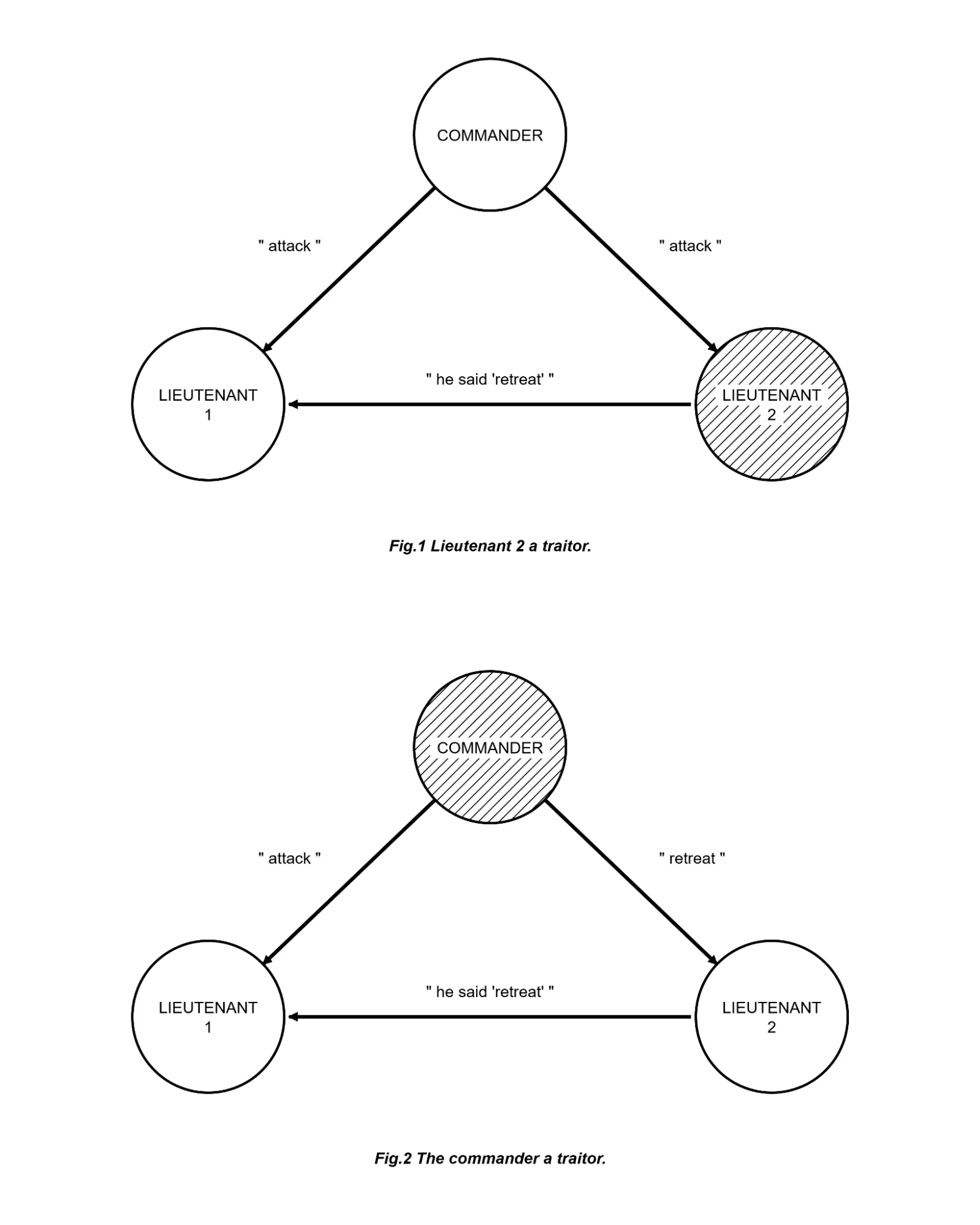
The Byzantine Generals Problem is often presented as a thought experiment in game theory that describes the difficulty decentralized systems face when trying to reach a collective agreement without a central authority. The generals must communicate through messengers to unanimously decide on a single common plan of action: either to attack or to retreat. Some of the generals may be traitors actively trying to prevent the loyal generals from reaching a consensus, or a traitor might send different messages to different generals. If the loyal generals fail to execute the exact same plan (e.g., some attack while others retreat), the entire army faces destruction. The Houthi audio clip incident opens up a new category of Generals Problem:
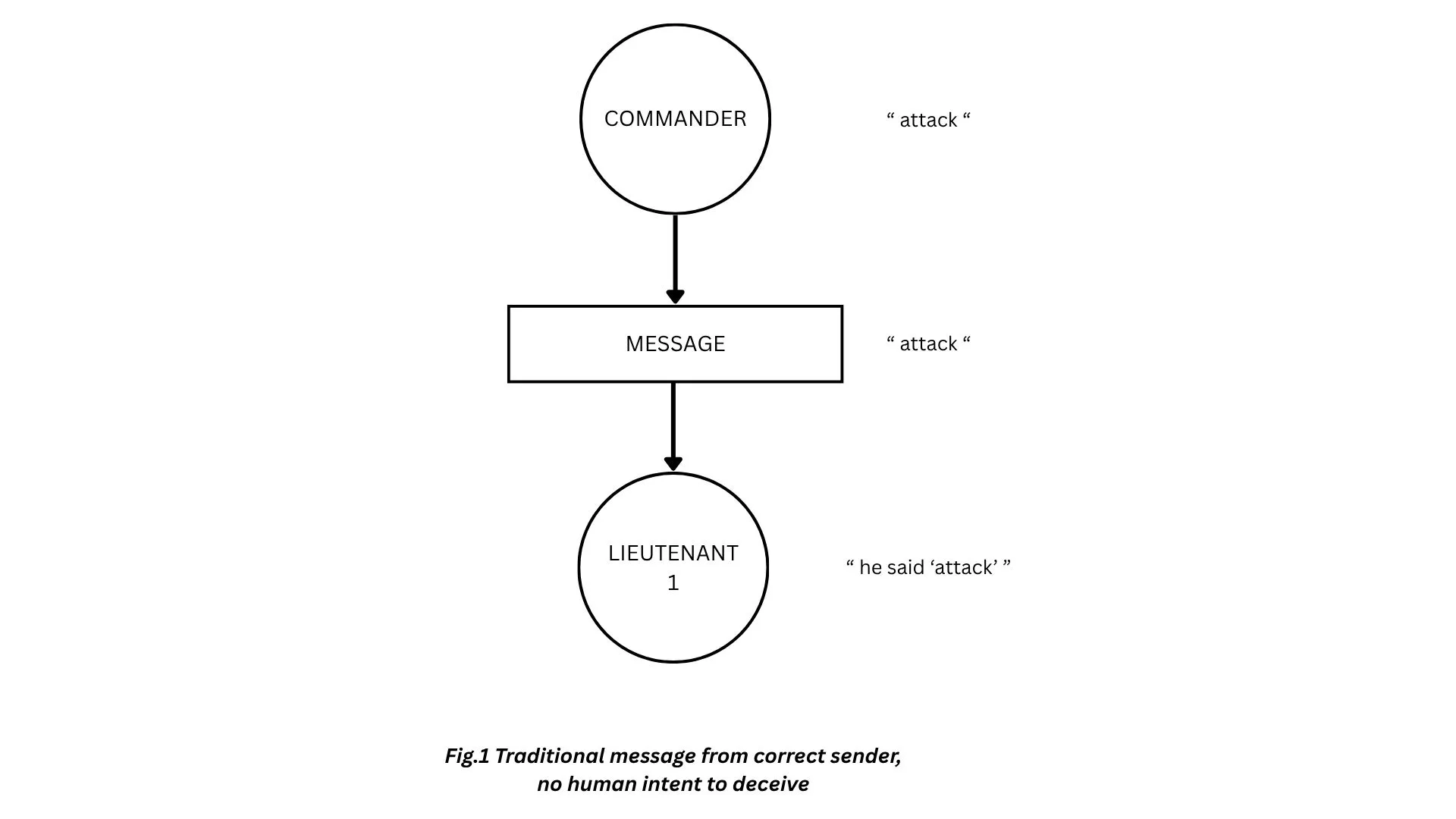
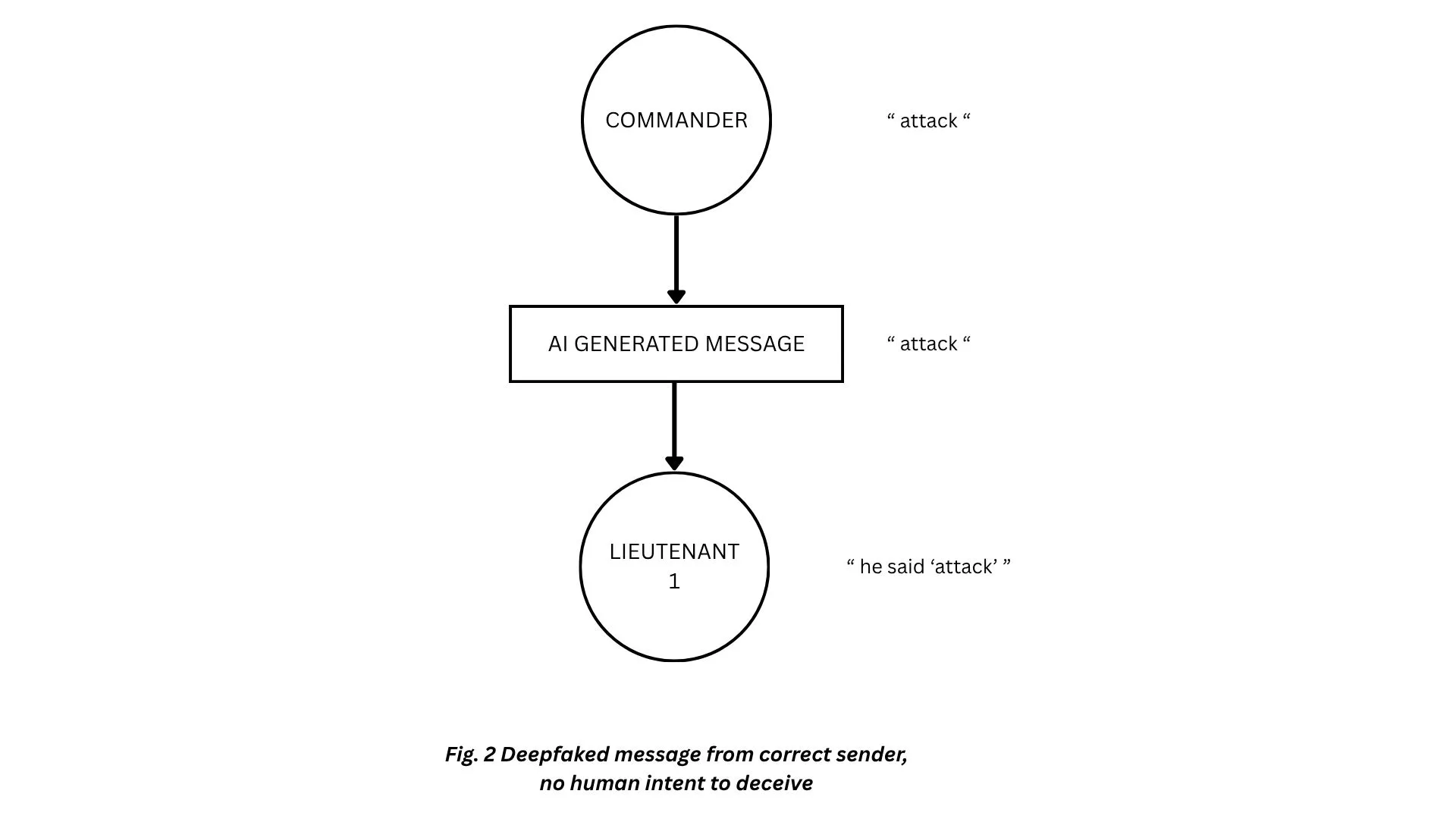
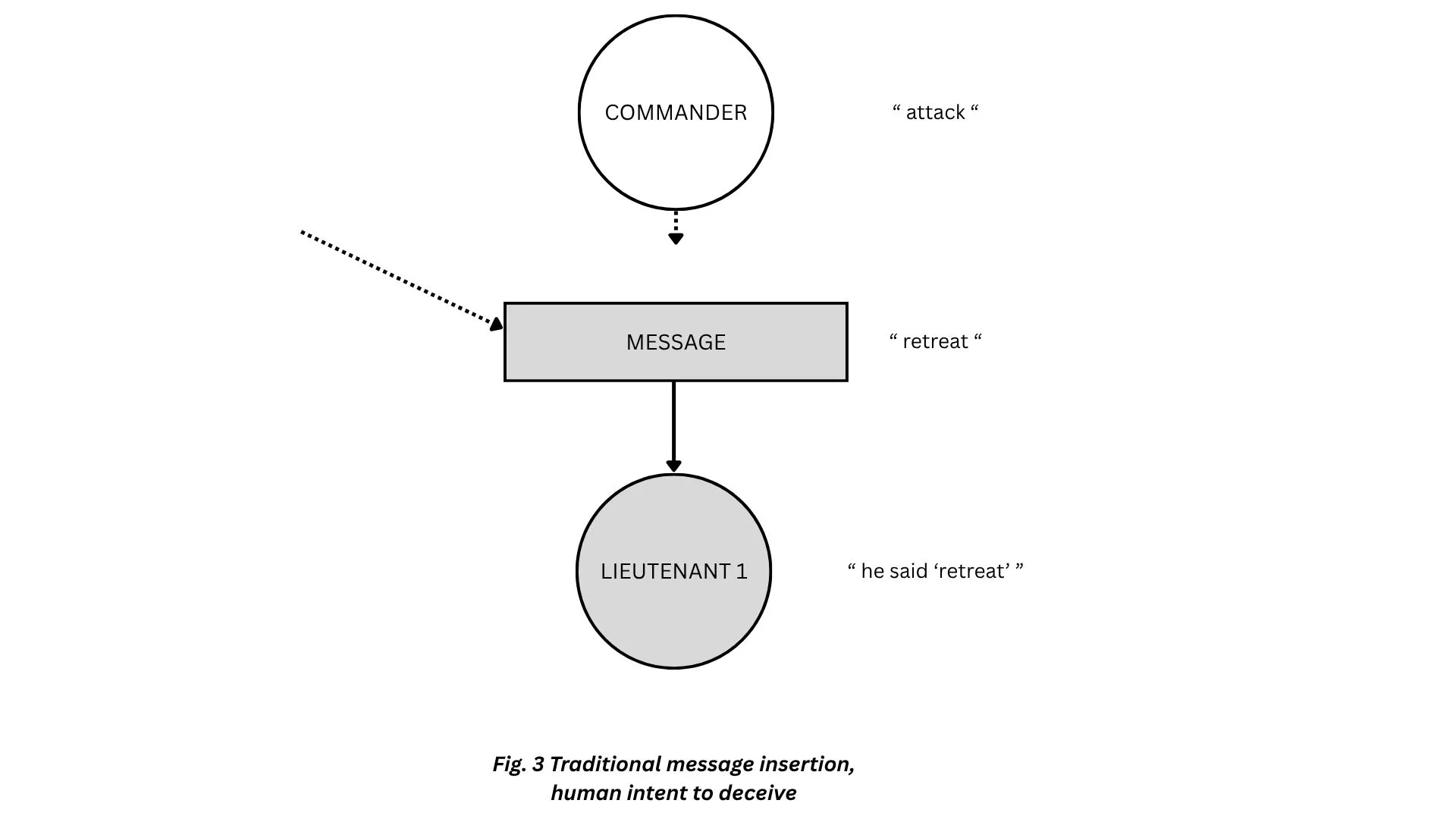
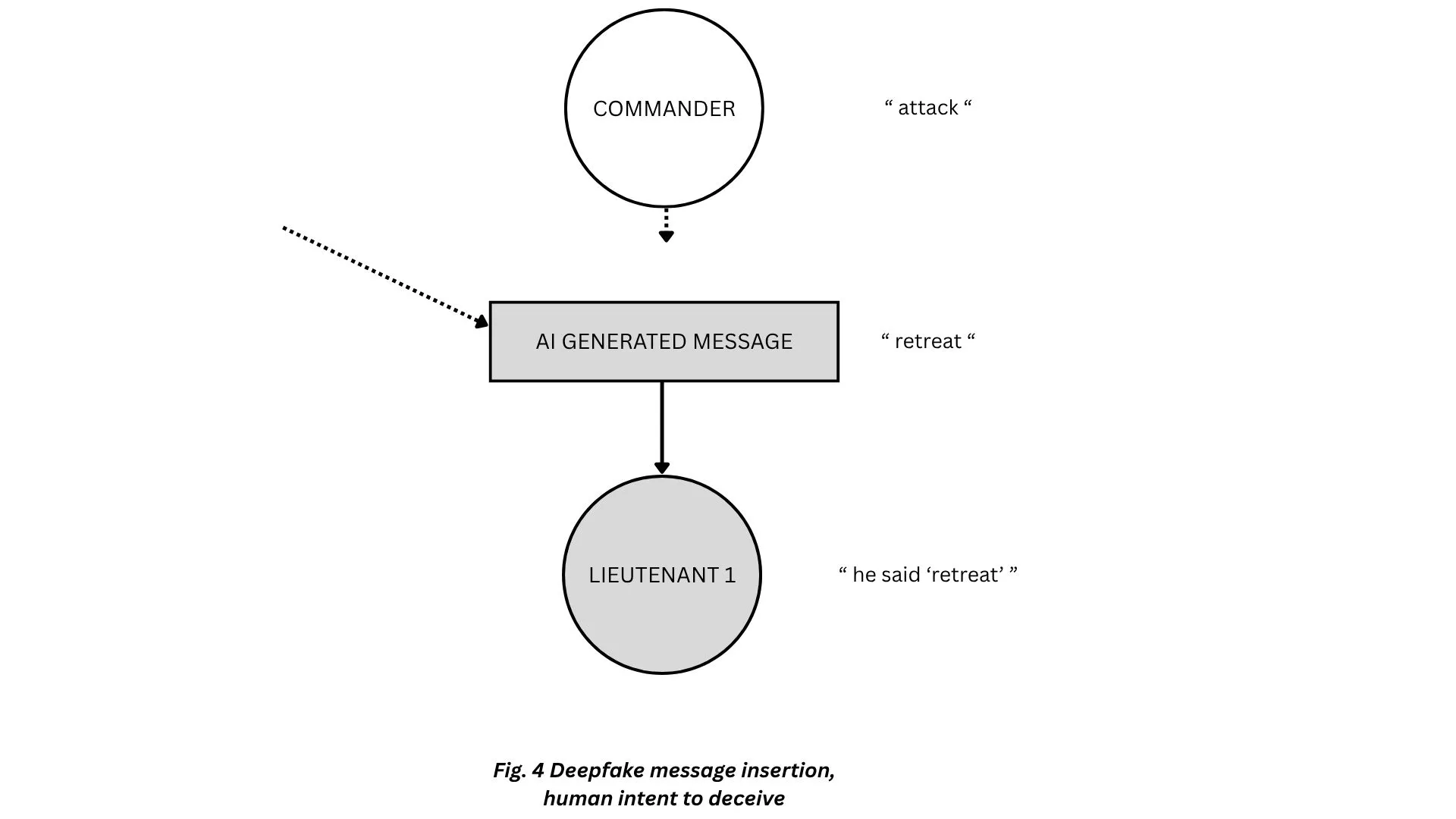
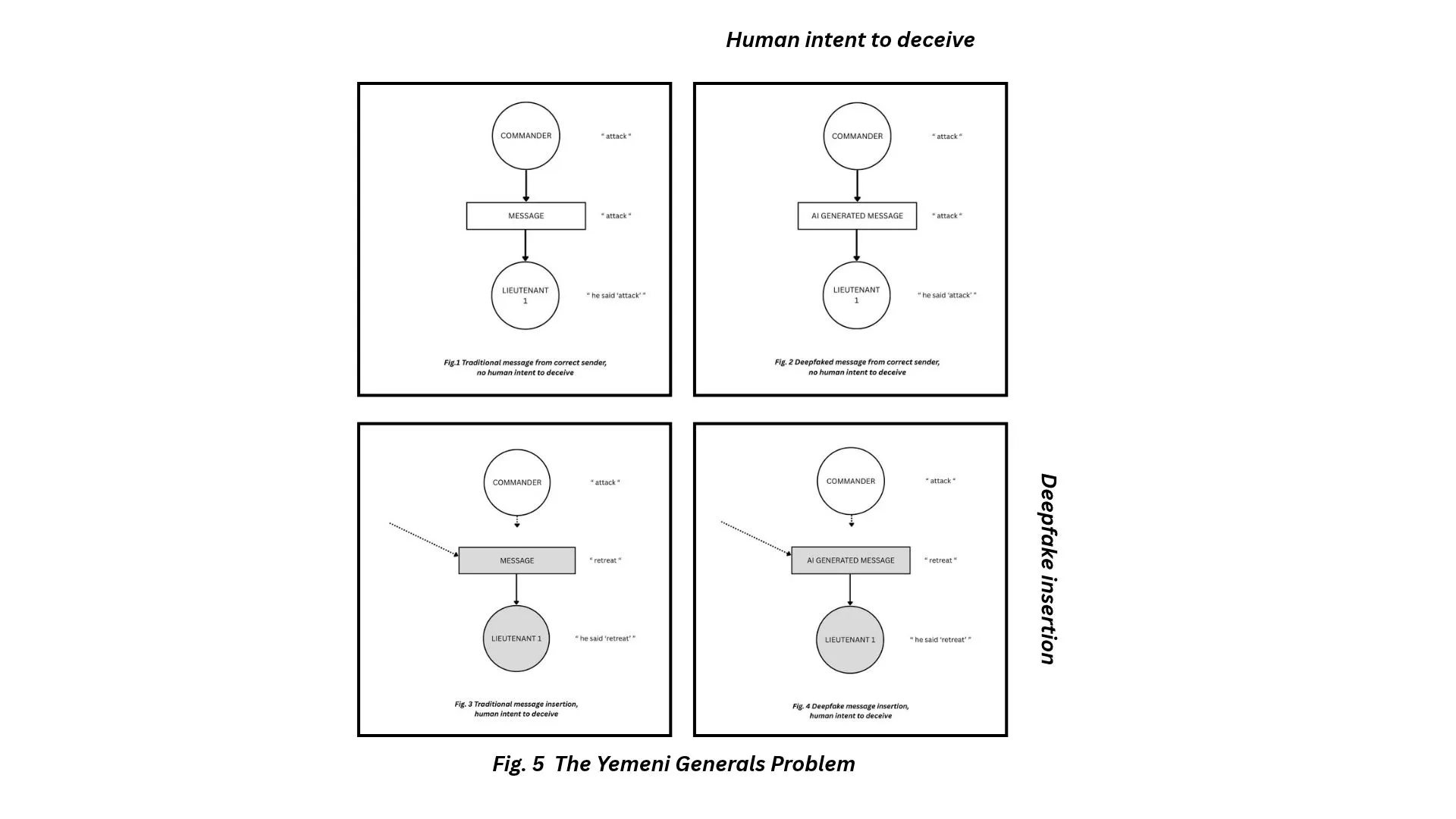
The general’s forces are spread across a battlefield. His commanders cannot physically see him. They hear him relaying a message and they act on what they hear.
We have presented a new class of Generals Problem. In the new Yemeni Generals Problem, the problem is not that the Lieutenants might be traitors, but instead that the message itself might have been a deepfake insertion by the enemy, designed to deceive. We intend this as a first draft to illustrate a line of active research at Who Technologies. We welcome the thoughts and collaboration of others in the field, and it is our hope that this serves to clarify the public discourse.
Footnotes
-
ynet Global. “Houthis accused of using AI to fake Yemeni general’s retreat order during Mocha offensive.” Ynetnews, September 12, 2026. https://www.ynetnews.com/article/hkimmwxkgl ↩
-
Al-Khabar al-Yemeni. “Audio recording of Tareq Saleh directs his forces to withdraw” (Arabic). September 9, 2026, 23:06. https://alkhabaralyemeni.net/2026/09/09/354311/ ↩
-
Badger, A. “AI Is Coming for the Chain of Command.” The Cipher Brief, September 23, 2026. https://www.thecipherbrief.com/ai-is-coming-for-the-chain-of-command ↩
-
Al-Mashhad. “National Resistance reveals the truth about a dangerous recording attributed to Tareq Saleh” (Arabic). September 10, 2026, 00:24. https://www.almashhad.news/news/493966 ↩
-
WION News. “Deepfake at war: Houthis accused of using AI to fake Yemeni commander’s voice amid Mocha battle.” September 13, 2026. https://www.wionews.com/world/deepfake-at-war-houthis-accused-of-using-ai-to-fake-yemeni-commander-s-voice-amid-mocha-battle-1789283893948 ↩
-
Times Now. “Houthis Used This AI Bluff To Capture Mocha: General’s Voice Cloned To Force Yemen Troop To Retreat.” YouTube. September 12, 2026. https://www.youtube.com/watch?v=NpiO65UanwM&t=20 ↩
-
Africa Center for Strategic Studies. “Houthi Leverage over the Red Sea Escalates Threats for Africa.” September 22, 2026. https://africacenter.org/spotlight/2026-houthi-red-sea-threats/ ↩
-
Leber, A., Warner, L. A. “The Impacts of the Houthis’ Advance Could Extend Well Beyond Saudi Arabia.” Carnegie Endowment for International Peace, September 23, 2026. https://carnegieendowment.org/emissary/2026/09/houthis-bab-al-mandeb-impacts-saudi-arabia-somaliland ↩
-
This framing follows SRI International’s The Byzantine Generals Problem, which assumes that the receiver of a message knows who sent it, and solves the general case with unforgeable signed messages. Lamport, L., Shostak, R., Pease, M. “The Byzantine Generals Problem.” ACM Transactions on Programming Languages and Systems 4(3), July 1982. https://lamport.azurewebsites.net/pubs/byz.pdf ↩